
 Build Faster with AfterBox
Access over 4000 ready-to-use materials for Unreal Engine, V-Ray and Corona.
Create your account and receive $12 free credit.
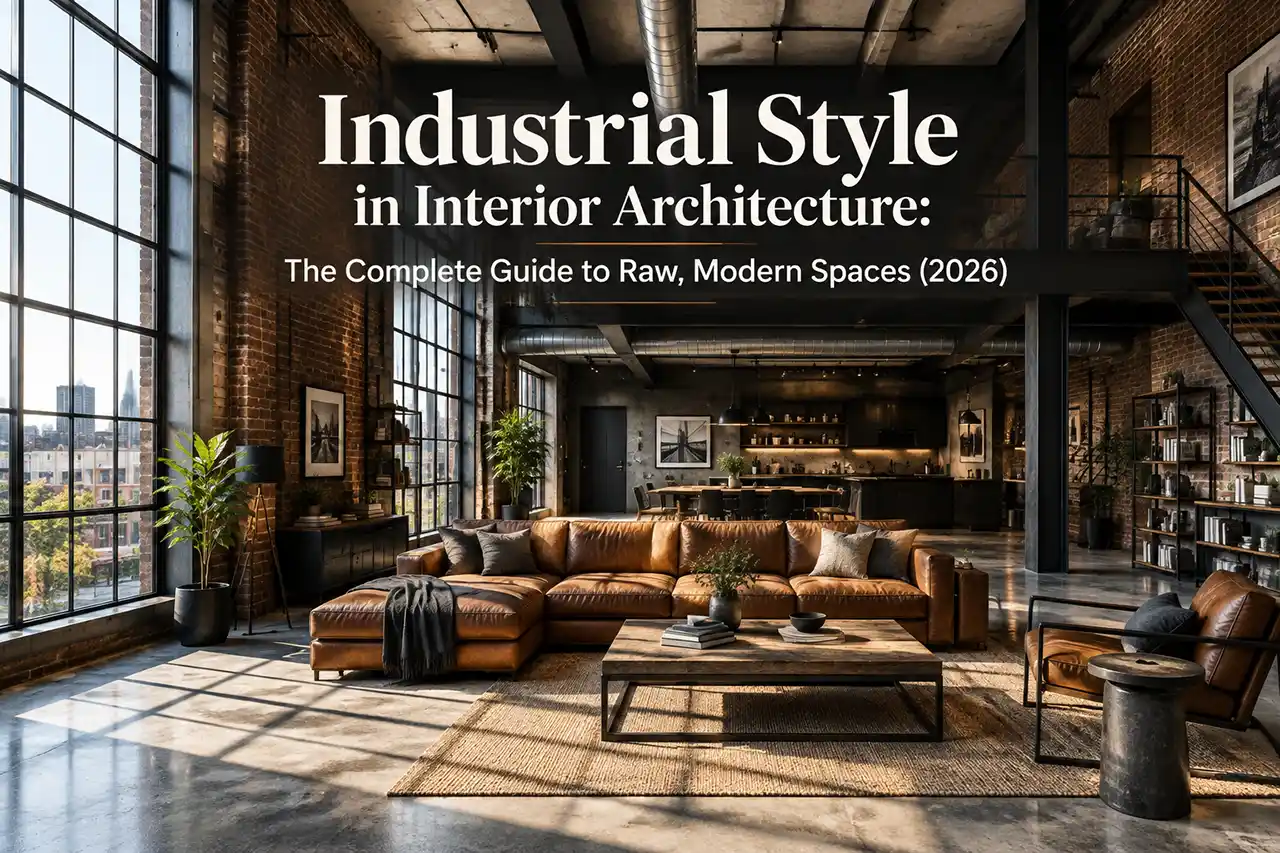
What Is Industrial Style
Industrial style in interior architecture celebrates raw structure, functional mechanics, and unfinished surfaces. When exploring what is industrial style, you will find it embraces the luxury of simplicity through genuine materials. The origin story of industrial style dates back to the 1950s American loft conversions. Deserted factories and manufacturing plants in cities like New York were transformed into living spaces. This trend quickly spread across international design hubs, finding new expressions in London, Paris, and Prague. Today, industrial style interior design remains popular because it highlights structural honesty. Core identity elements include exposed brick walls, raw concrete, structural steel beams, and exposed ductwork. High ceilings and expansive open-plan layouts complete the classic architectural foundation.
Industrial vs Brutalist Architecture
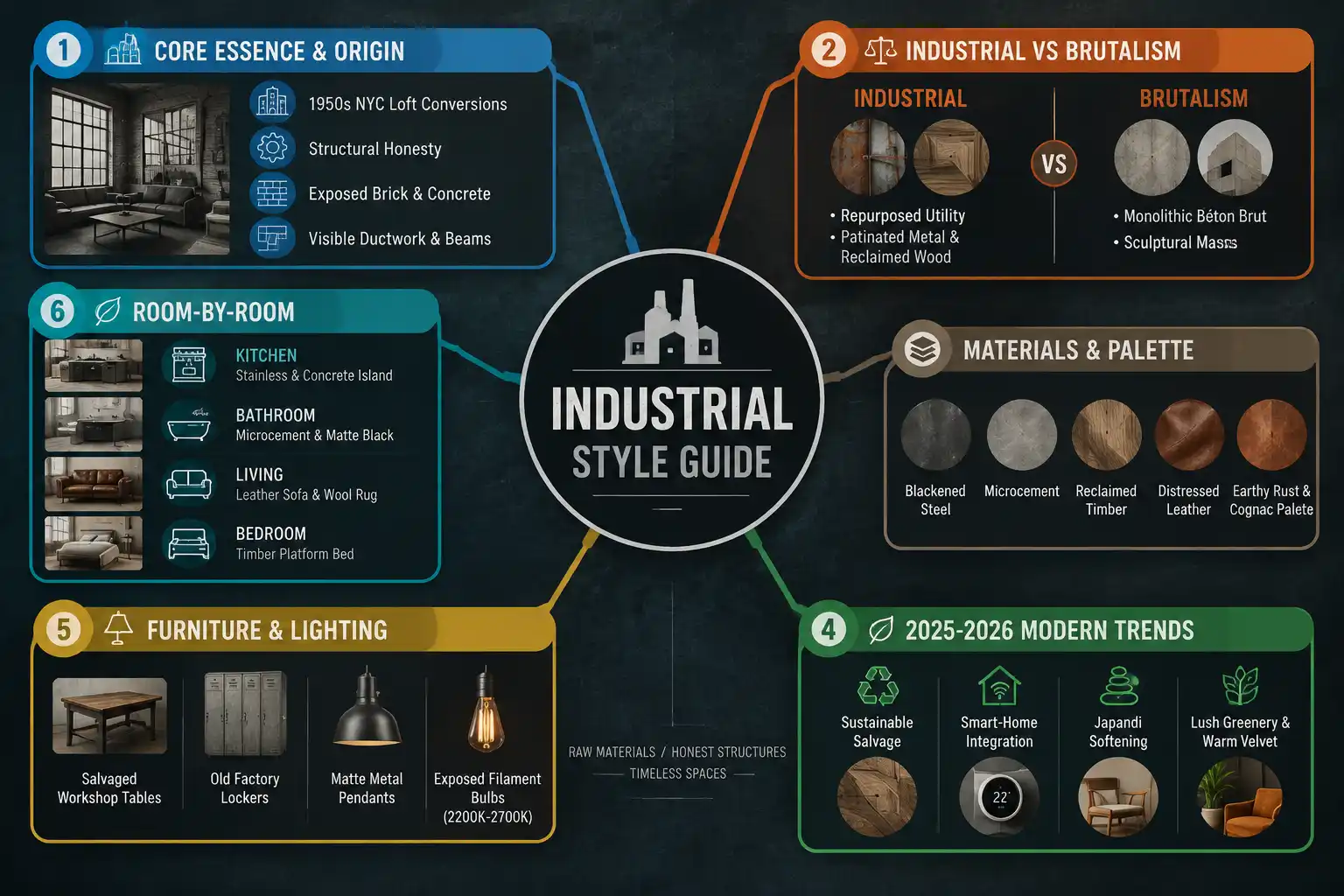
Many design enthusiasts confuse industrial interiors with Brutalist architecture. However, clear distinctions exist between these two aesthetics. The following table highlights the core differences across material usage, texture, color palettes, and overall design intent.
| Design Feature | Industrial Style | Brutalist Architecture |
|---|---|---|
| Primary Material | Reclaimed wood, iron, steel, brick | Monolithic raw concrete (béton brut) |
| Texture Profile | Weathered, patinated, mixed textures | Heavy, monumental, monolithic planes |
| Color Palette | Warm neutrals, rust, black, cognac | Monochromatic grays and deep charcoal |
| Design Intent | Repurposed utility and human scale | Sculptural mass and structural expression |
Industrial Interior Design Colors and Materials
The industrial interior design colors palette relies heavily on grounded, neutral, and dark tones. Think of shades inspired by old factories, weathered metals, and earthy elements. Layering these colors prevents the space from feeling cold or unwelcoming.
Key materials and textures define the physical character of the space. Concrete floors and microcement wall finishes provide a smooth, durable base. Reclaimed wood brings warmth through natural grain and imperfections. Distressed leather upholstery adds tactile comfort. Blackened steel and brushed metals introduce sharp, manufactured contrast.
Looking for a Faster Workflow?
Instead of creating every material manually, use a library of over 4000 ready-to-use materials and import them into your projects in seconds.
Furniture and Lighting Choices
Selecting the right furniture and fixtures brings the raw architecture to life. Look for upcycled furniture pieces that show history and wear. Mix vintage workshop tables with modern seating to create balance.
Metal Pendants and Exposed Bulbs
Lighting acts as functional sculpture in industrial spaces. Choose metal pendant lights with matte black or aged brass finishes. Use exposed filament LED bulbs with warm color temperatures between 2200K and 2700K to create a cozy glow.
Upcycled and Salvaged Furnishings
Incorporate storage cabinets made from old lockers or media consoles crafted from railway sleepers. These items add authentic character without cluttering the floor plan.
Room-by-Room Implementation
Applying industrial style interior design requires tailored approaches for different functional zones in your home.
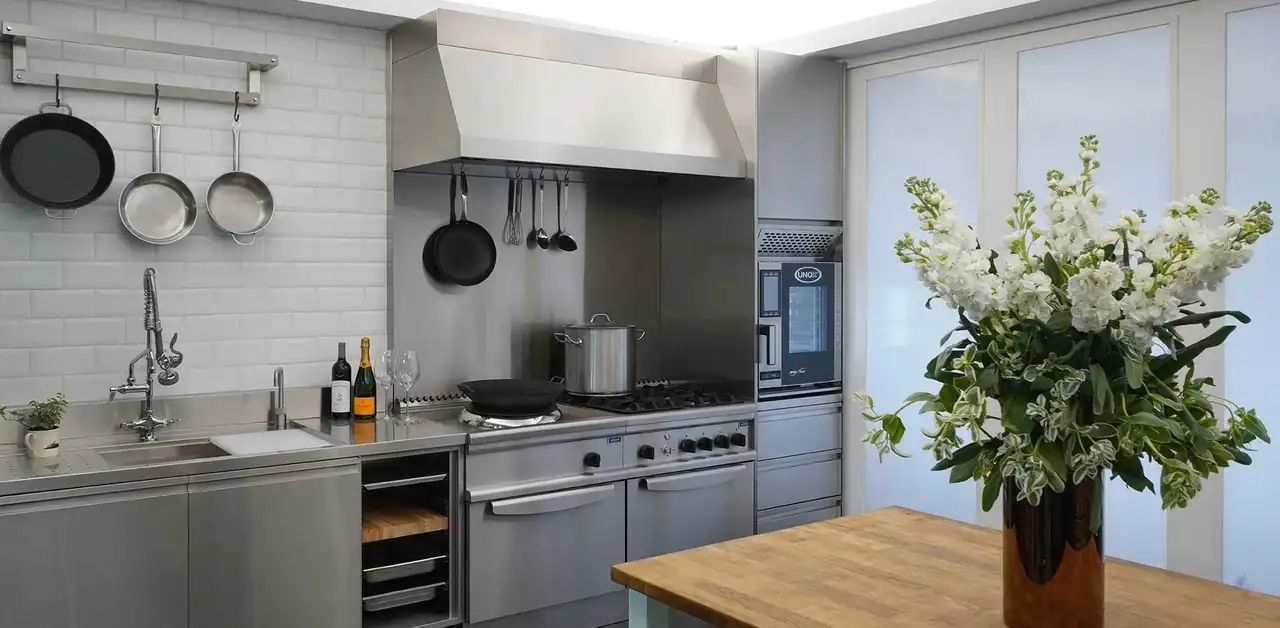
Kitchen
Install stainless steel countertops or concrete islands. Use open metal shelving instead of upper cabinets to display dishware and keep the walls visually light.
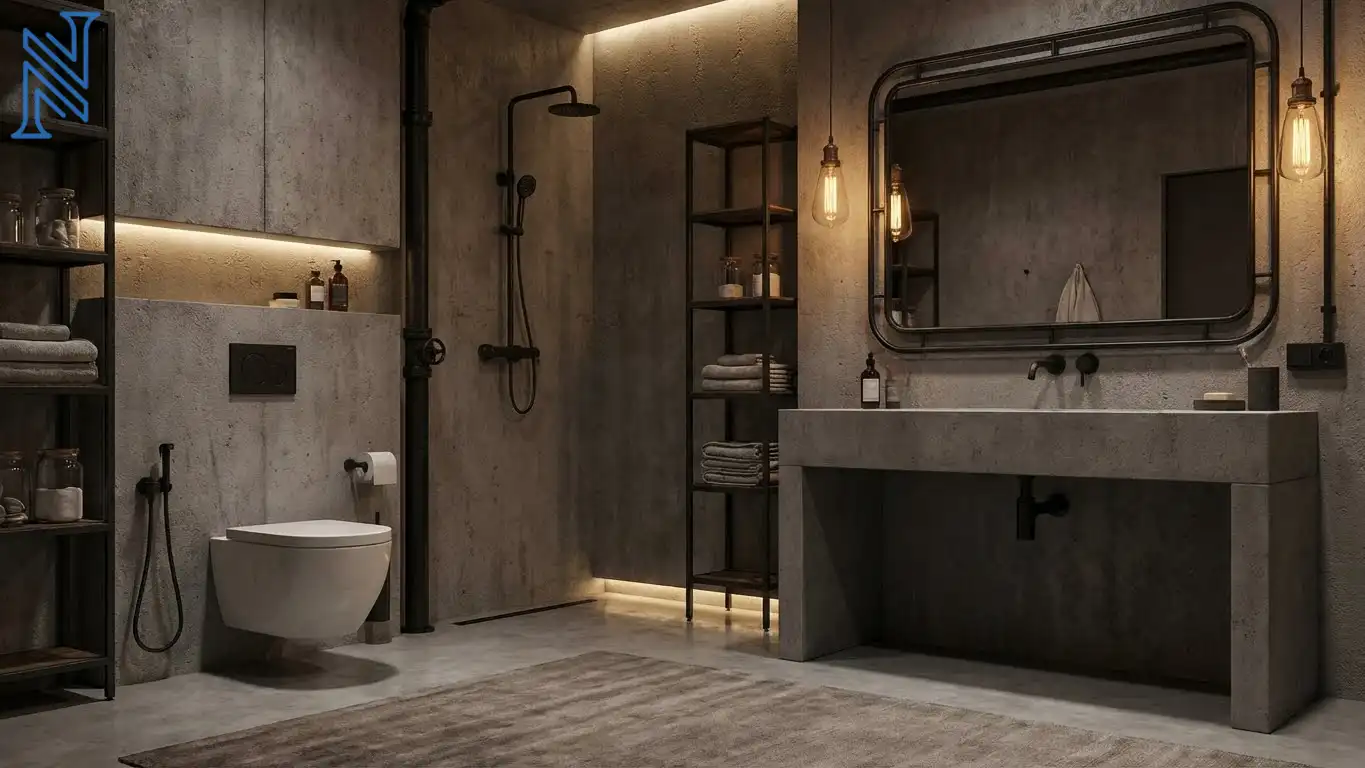
Bathroom
Combine microcement walk-in showers with matte black fixtures. Add a reclaimed wood vanity topped with a vessel sink for organic contrast.
Living Room
Anchor the seating area with a worn leather sofa, a reclaimed wood coffee table, and a large wool area rug to soften concrete floors.
Bedroom
Build a simple platform bed using untreated timber. Frame the bed with industrial wall sconces and soften the room with heavy linen bedding.
Laundry
Expose plumbing pipes where possible. Use matte black wire baskets and durable butcher block folding counters above front-load appliances.
Outdoor
Extend the look to your patio with powder-coated steel furniture, concrete planters, and exterior Edison string lighting.

Modern 2025-2026 Trends in Industrial Interiors
Contemporary industrial design has evolved beyond cold, purely metallic spaces. The latest trends focus on sustainability and comfort.
Sustainable and Reclaimed Materials
Sourcing locally salvaged timber and recycled steel reduces environmental impact while offering unmatched authenticity.
Smart-Home Integration
Hide modern technology behind vintage enclosures, or contrast sleek smart-home touchpads with raw metal wall plates.
Blending with Japandi and Scandinavian Influences
Soften stark industrial edges by combining the style with Japandi minimalism and warm Scandinavian textiles.
Softening the Look with Velvet, Warm Rugs, and Greenery
Layer rich velvet cushions, thick woven rugs, and large potted plants like fiddle-leaf figs to breathe life into the room.
How to Achieve Industrial Style at Home
You do not need a genuine loft to master industrial style in interior architecture. Start by exposing structural elements where feasible, such as stripping drywall to reveal original brick. If structural exposure is impossible, use high-quality faux finishes like microcement panels or brick veneer tiles. Focus on adding metal hardware, track lighting, and distressed leather accents to anchor your modern spaces.
