


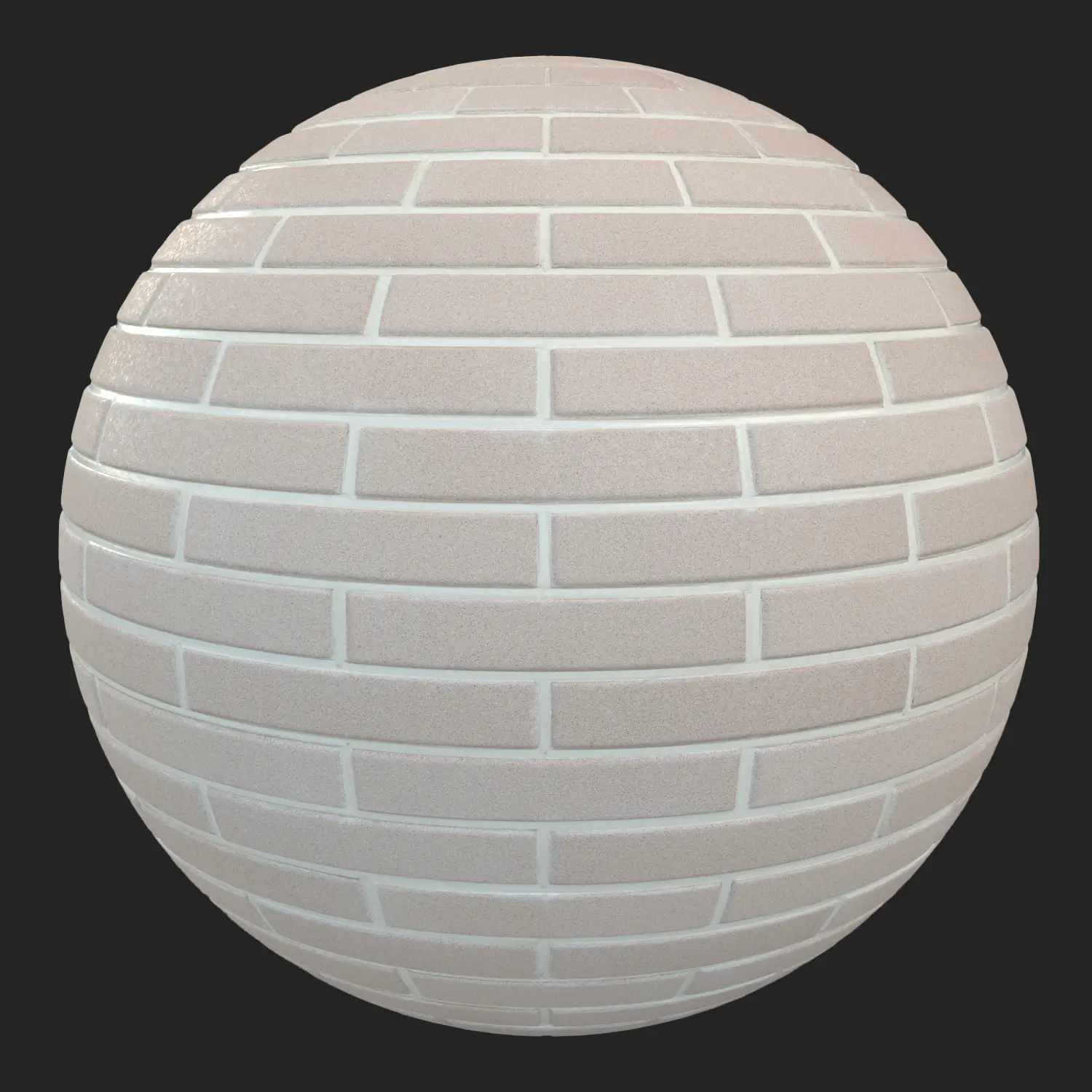


Context & Visual Identity
This brown brick wall texture represents a type of masonry frequently used in residential façades, low-rise urban housing, and public-facing buildings across European cities and towns. The half-offset brick pattern creates a calm, familiar rhythm, while the light terracotta-brown bricks paired with grey mortar joints keep the surface visually balanced.

Its identity is intentionally neutral. It can sit comfortably in a rural village context, an urban neighborhood, or a contemporary architectural project that references traditional materials. The clean execution and matte surface prevent the texture from feeling decorative or stylized, allowing it to support architecture rather than compete with it.
Typical Problems This Material Solves
In many visualization projects, brick walls either appear too noisy or too flat. Overly rough bricks can distract from the overall composition, while overly smooth ones often look artificial. This texture addresses that balance by keeping the brick faces smooth and consistent, while using recessed joints to introduce depth and shadow where it naturally occurs.
Another recurring issue is material credibility at scale. When brick textures are stretched across façades or interior walls, repetition quickly becomes noticeable. The seamless structure and high resolution of this material reduce visible tiling, making it suitable for both small interior walls and large exterior elevations.
Practical Use Cases
Architects and visualizers can use this material for residential building façades, boundary walls, and semi-public spaces where brick is meant to feel honest and familiar. It works well in modern designs that draw inspiration from traditional construction, especially when paired with concrete, wood, or metal elements.
Inside, the texture is suitable for feature walls in cafés, restaurants, galleries, and museums where brick adds warmth without overwhelming the space. In urban visualization and game environments, it fits naturally into streetscapes, courtyards, and transitional zones between historic and contemporary areas.
Rendering & Realism Notes
The material is built as a full PBR set, ensuring predictable behavior under different lighting conditions. The matte surface avoids harsh reflections, which helps maintain realism in both daylight and artificial lighting scenarios. Recessed mortar lines create natural shadow separation, enhancing depth without relying on exaggerated normal intensity.
At 8K resolution (8096×8096), the texture supports close-up camera angles while remaining efficient when downscaled for performance-sensitive scenes.
Render Engine Compatibility
In Unreal Engine, the texture integrates smoothly into standard PBR workflows, performing reliably under real-time lighting and global illumination systems. In V-Ray and Corona Renderer, it works with default physically based materials, producing consistent color response and surface depth without extensive tweaking. The material setup is straightforward, allowing artists to focus on composition rather than technical adjustments.
Workflow Advantage with AfterBox
All materials are available through the lightweight AfterBox application, which runs locally and occupies around 16MB.
Users can browse and manage materials efficiently, then drag & drop them directly into Unreal Engine or into V-Ray and Corona workflows inside 3ds Max. This keeps material usage consistent across projects and reduces repetitive setup steps when switching render engines.

Soft CTA
Access a comprehensive library of brick materials with an AfterBox subscription.

Save time on material setup
Instead of downloading this texture, use the optimized ready-made material for VRay , Corona Renderer (3ds Max) and Unreal Engine available in AfterBox.
No manual setup


