


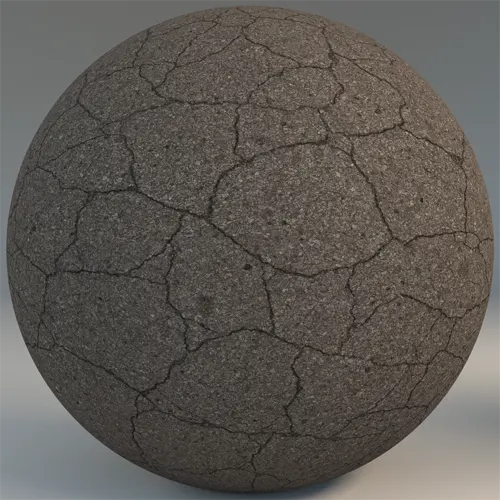
## Defining the Cracked Asphalt Aesthetic
Achieving a sense of realism in exterior architectural visualization often relies on the quality of your ground planes. This cracked asphalt texture provides a highly detailed, weathered surface that mimics years of environmental exposure. With its charcoal and slate color palette and a complex network of structural fatigue cracks, the material immediately adds visual weight to any scene. Unlike standard clean road surfaces, this asset captures the irregular, high-contrast fissures and rough aggregate particles that characterize real-world pavement undergoing natural decay.
## Practical Applications for Realistic Environments
This material is an essential tool for artists needing to depict site context with authentic grit. For exterior architecture, it works perfectly for aging parking lots, residential driveways, or pedestrian paths that require a lived-in feel. In game environments, the high-frequency displacement makes it a go-to choice for post-apocalyptic settings or construction sites where the ground is clearly worn. Interior designers working on industrial-themed lofts or retail spaces can also leverage the granular texture to ground their designs in an urban, contemporary style.
## Stylistic Compatibility and Composition
The cool, neutral tones of this surface make it a versatile pairing for a wide range of materials. It creates a satisfying contrast when placed alongside raw architectural elements like weathered steel, exposed red brick, or modern white-painted metal structures. Its brutalist and minimalist aesthetic is particularly effective for large-scale outdoor plazas or industrial warehouse flooring where a clean, uniform look would feel too synthetic.
## Performance and Technical Fidelity
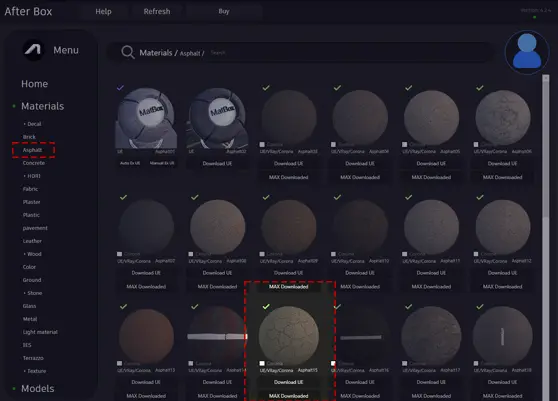
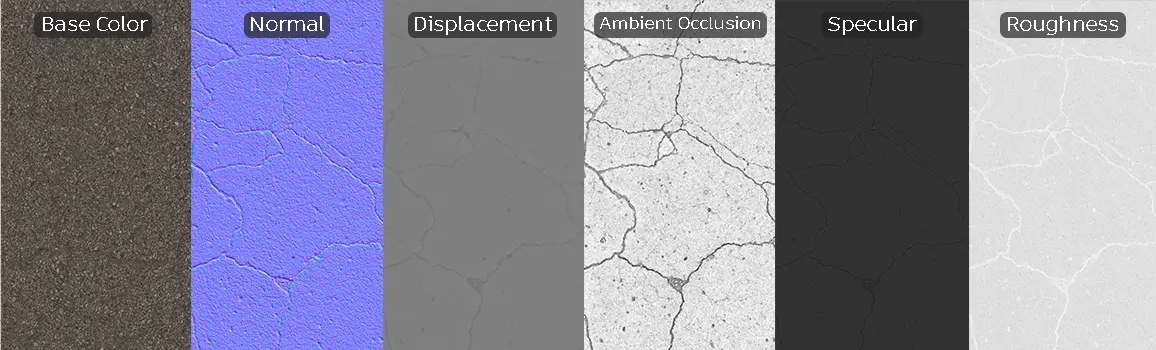
To ensure the highest quality in your renders, this 8K seamless asset includes a full suite of maps: Base Color, Specular, Roughness, Normal, Displacement, and Ambient Occlusion. The displacement map is specifically calibrated to handle the deep, irregular cracks, providing excellent silhouette detail even at glancing angles. While the material is highly detailed, we recommend adjusting your tiling offsets in your material editor to prevent the crack pattern from becoming visually repetitive across vast landscapes.
Save Time with AfterBox
Browse, download and apply materials directly in Unreal Engine, V-Ray and Corona.
## Enhancing Realism through Layering
To maximize the impact of this asphalt, consider adding secondary weathering elements. The fissures are ideal locations to place procedural moss or sand debris, which will help break up the uniformity. Adding subtle oil stains or faded white traffic markings can further bridge the gap between a generic road and a specific, localized environment, elevating the final render significantly.


## Pre-Configured Materials for Professional Pipelines
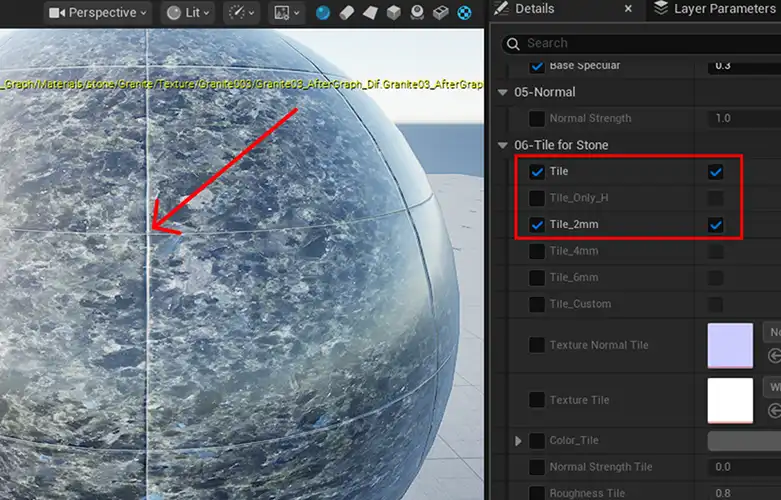
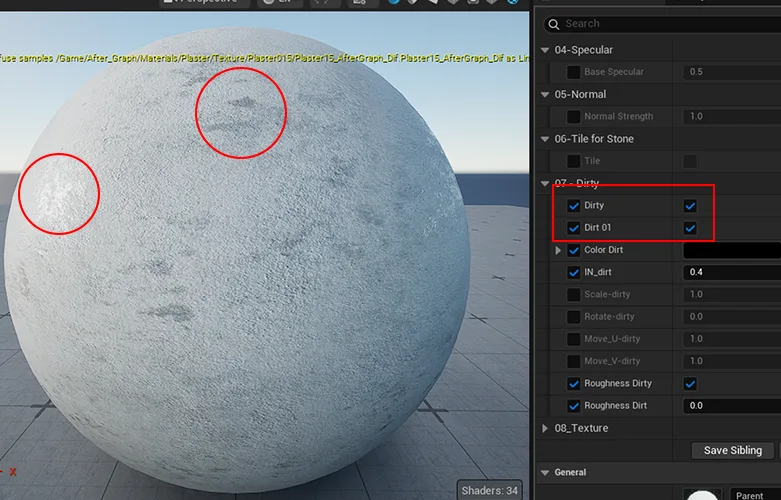
This material is optimized for immediate deployment within professional rendering pipelines. Because the included textures are fully PBR-compliant, they integrate seamlessly into V-Ray for 3ds Max, Corona Renderer, and Unreal Engine. You can skip the tedious setup phase, as the maps are pre-configured to ensure the roughness and displacement values react correctly to your scene’s lighting conditions, whether you are working with path tracing or real-time ray tracing.
## Streamlined Integration into Your Workflow
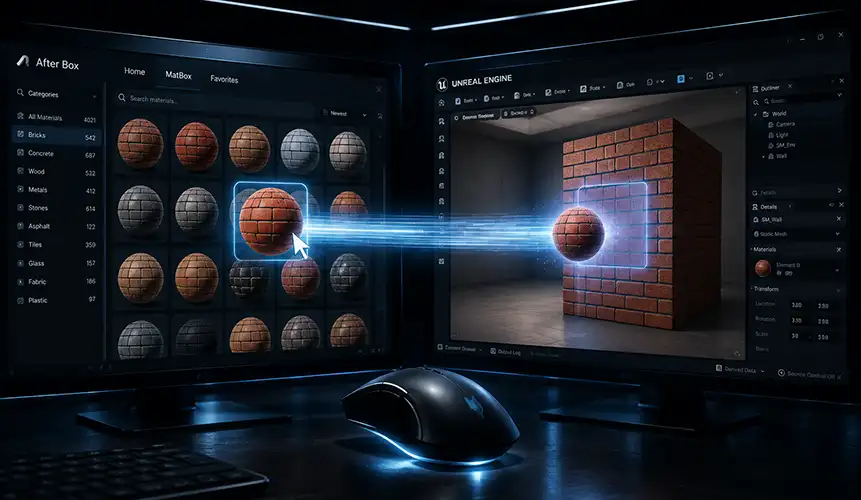
By choosing our ready-to-use materials, you eliminate the overhead of manually creating shaders. Simply drag and drop the material into your environment to instantly gain control over the complex surface characteristics. For studios and independent artists looking to accelerate their production timelines, our subscription plans offer full access to our entire library of professional-grade assets, allowing you to focus on design rather than texture building.

Save time on material setup
Instead of downloading this texture, use the optimized ready-made material for VRay , Corona Renderer (3ds Max) and Unreal Engine available in AfterBox.
No manual setup


